
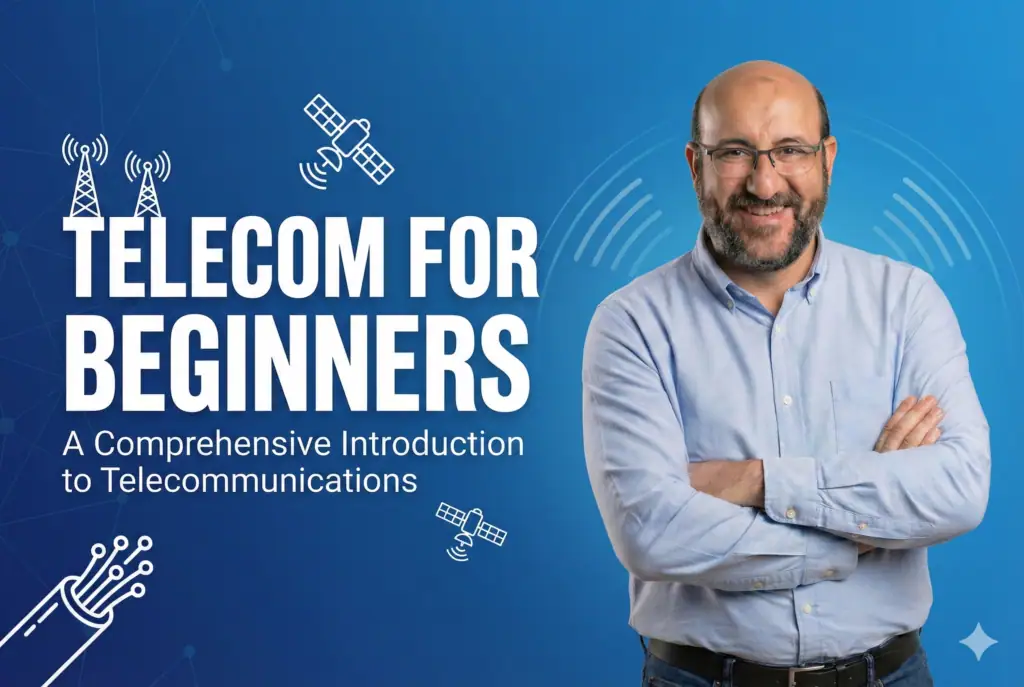
Course Title
Telecom for Beginners and Non-Engineers
📝 Course Description
This course provides a clear, simplified, and practical introduction to telecommunications for beginners and non-engineers.
It explains core telecom concepts without heavy mathematics or complex engineering theory, making it ideal for learners with no technical background.
The course covers a wide range of topics including signals, antennas, microwave systems, radar, networking, satellite communications, mobile networks, and optical fiber, helping learners understand how modern communication systems work in everyday life.
By the end of the course, participants will have a strong conceptual understanding of telecom technologies and how they are used in real-world applications.
⏱ Course Duration
16 Hours
🎯 Target Audience
- Non-engineers working in telecom-related fields
- Sales, marketing, business development, and management professionals
- Fresh graduates from non-engineering backgrounds
- Anyone interested in understanding telecommunications fundamentals
- Beginners with no technical background
✅ Prerequisites
- No prerequisites required
- No engineering or technical background needed
🌐 Language
Arabic with English subtitles
🎯 Learning Outcomes
By the end of this course, learners will be able to:
- Understand basic signal concepts and modulation
- Explain how analog signals are converted to digital
- Understand antenna principles and common antenna types
- Identify microwave systems and their applications
- Understand radar concepts and real-world uses
- Explain basic networking concepts and how the internet works
- Understand satellite systems and their applications
- Understand mobile communication generations from 1G to 5G
- Understand the basics of optical fiber communication
- Communicate effectively with technical teams using telecom terminology
📚 Course Content Outline
Section 1: Introduction to Signals
- Signal basics
- Analog to digital conversion
- Modulation concepts
Section 2: Antenna Basics
- Antenna fundamentals
- Antenna theory and types
Section 3: Microwave Systems
- Introduction to microwave systems
- Microwave frequency bands
- Advantages and disadvantages
- Microwave system components
- Microwave configurations
Section 4: Radar Systems
- Radar concept and applications
- Radar performance parameters
- Radar performance factors
- Types of radar
- Radar antennas and operating frequencies
Section 5: Networking Fundamentals
- Data transmission concepts
- Network topologies
- OSI and TCP/IP models
- IP addressing basics
- How the internet works
- Cloud computing fundamentals
Section 6: Satellite Systems
- Satellite concepts and operation
- Satellite applications
- Types of satellites
- Satellite launching
- Satellite system components
- Real satellite system examples
Section 7: Mobile Communications
- Introduction to mobile communications
- First generation (1G)
- Second generation (2G)
- Cellular structure and planning basics
- Third generation (3G)
- Fourth generation (4G)
- Fifth generation (5G)
Section 8: Optical Fiber Communication
- Optical fiber concepts and advantages
- How optical fiber works
- Light sources
- Fiber layers and submarine cables
- Fiber fabrication
- Fiber losses and dispersion
- Final overview and course summary
🚀 Course Value
- Designed specifically for non-engineers
- Simple explanations with real-life examples
- Covers all major telecom domains in one course
- Ideal foundation for business, sales, and management roles
- Excellent first step before technical or engineering courses